

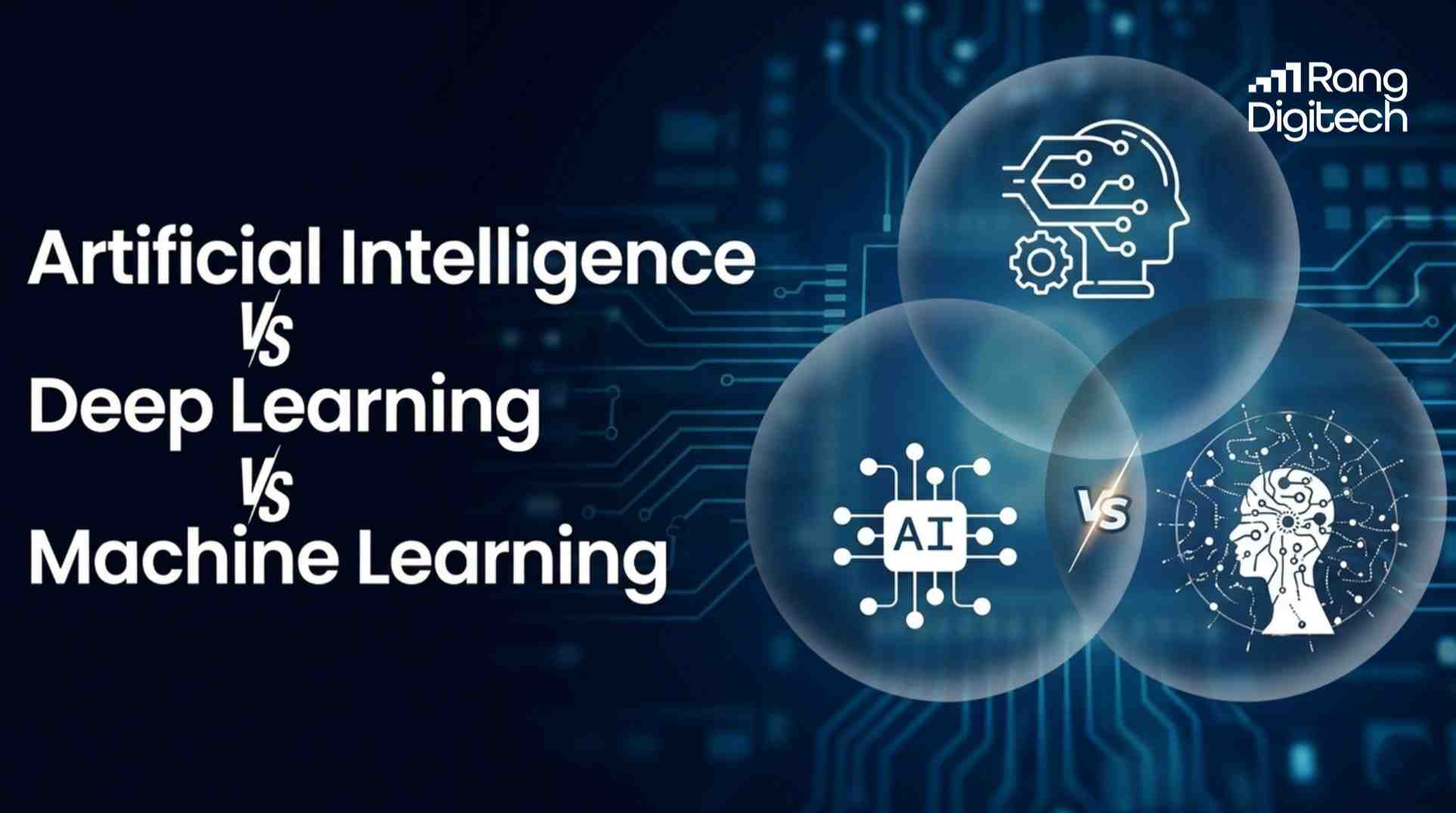
Artificial intelligence technologies are transforming modern businesses, but many people often confuse AI, machine learning, and deep learning.
While these technologies are closely connected, each one has a different role in data processing, automation, and decision-making. Understanding these differences helps businesses choose the right solutions for their operational goals and digital growth strategies.
Understanding Artificial Intelligence
To understand AI vs Machine Learning, businesses first need to understand what is artificial intelligence. AI refers to computer systems designed to perform tasks that normally require human intelligence, such as decision-making, problem-solving, and data analysis. Many companies use intelligent automation services to improve efficiency through AI-powered business processes.
What Is Machine Learning?
Machine learning is a subset of AI that allows systems to learn from data and improve performance over time without direct programming updates. The comparison of Machine Learning vs Deep Learning often begins with understanding that machine learning relies on algorithms that identify patterns and make predictions based on data inputs.
What Is Deep Learning?
Deep learning is a more advanced branch of machine learning that uses neural networks to process large amounts of complex data. Businesses comparing AI vs Deep Learning often recognize that deep learning is specifically designed for advanced tasks such as image recognition, speech processing, and predictive analysis.
Key Differences Between These Technologies
The discussion around AI vs Machine Learning focuses on scope and functionality. AI is the broad concept, while machine learning and deep learning are specialized subsets within AI. Similarly, Machine Learning vs Deep Learning highlights that deep learning handles more complex data processing with multiple neural network layers.
Business Applications and Automation
Businesses investing in custom AI solutions in New Jersey often use machine learning and deep learning technologies to improve automation, customer service, and operational efficiency. Many intelligent automation services also rely on AI-powered systems to streamline repetitive workflows and improve decision-making.
Common Misunderstandings About AI Technologies
Some businesses still believe advanced AI systems can fully replace human thinking, which is one of the common myths about AI. In reality, AI technologies are designed to support business operations and improve efficiency rather than function independently like humans.
Conclusion
Understanding the differences between AI, machine learning, and deep learning helps businesses adopt smarter and more effective technology strategies. These technologies improve automation, data analysis, and operational performance across industries. Partnering with experts like Rang Digitech LLC helps businesses implement advanced AI systems, intelligent automation solutions, and scalable digital technologies designed for long-term growth and innovation.